ماڵی کتێبی کوردی
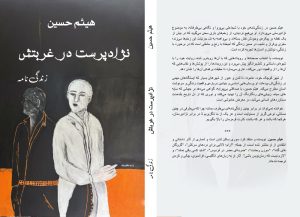
Publication of the Persian Translation of The Racist in His Exile: A Biography The Battle of Colors and Tendencies By Haitham Hussein
This book was originally published in Arabic under the title العنصريّ في غربته by Ramina Publishing in London.
The Persian translation of the biographical book The Racist in His Exile by Haitham Hussein has been published in Iran by Tafgeh Publishing. The book was translated into Persian by Farzad Rashidi.
This publication appears at a time when cultural discussions about racism, exile, and social integration are becoming increasingly important. The book introduces a contemporary Arabic biographical text to Persian-speaking readers, who may also be familiar with similar human experiences and social questions.
The Racist in His Exile is a biographical work written with a critical awareness. It presents stories about racism, exile, integration, and the conflicts that shape the course of human life. Across eighteen chapters, the author moves through different situations and events that reveal various forms of racism. These experiences show how the shocks people face in daily life can turn into a maze of darkness in which many become trapped.
The text moves from the personal to the general, and from small passing details to hidden social structures. It shows how small acts of exclusion are formed and how, over time, they accumulate and become an invisible system that affects language, procedures, looks, and human relationships.
The book discusses racism with courage and objectivity. It speaks about open wounds that still exist in many places, and it approaches these wounds through a life journey marked by the pain of living, writing, and dealing with people. The author selects situations and events that he has experienced or encountered, and examines them through his own narrative and philosophical style. He removes the layers that hide these experiences from their reality and brings them back to their human center.
From Amuda to London, and through the cities that became important stations in the author’s life, the text raises essential questions about reality and destiny. The author writes with inner honesty and offers a testimony about a world that is moving toward fading the very colors that have historically enriched it through human achievement.
The book emphasizes that racism is like a swamp, and the only way out of it is through awareness and acceptance of the other. It also presents exile as a constantly renewed maze that is difficult to erase completely. However, writing can ease its burden, and understanding and moral responsibility can reduce its intensity.
The text does not leave the reader in a neutral position. In matters that affect human destiny, hesitation can become a way of avoiding responsibility. The message of the book is clear: we need to take an ethical position against exclusion, discrimination, and rejection wherever they appear.
The Persian translation expands the readership of the book and gives it a new life in a cultural space where questions of identity, integration, and recognition meet. This translation also strengthens the dialogue between Arabic and Persian about the experiences of exile and racism. It shows that biography can cross borders when it is written with honesty and awareness, and when it is read as a human testimony carrying an ethical responsibility toward the present.
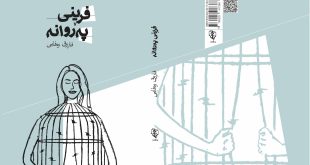
It is worth mentioning that the book has been published in 234 pages and in medium size. The cover design was created especially for the Persian translation by the visual artist Khodr Abdul Karim.

About the Author
Haitham Hussein is a Kurdish-Syrian novelist who holds British citizenship and lives in London. He has published several works of fiction and criticism, including Aram, Descendant of Stubborn Pains, Hostages of Sin, The Needle of Fear, A Harmful Weed in Paradise, Perhaps No One Will Remain, The Novel between Mine-Laying and Mystery-Making, The Novel and Life, The Novelist Beats the Drums of War, The Novelistic Character: A Probe for Discovery and Beginning, and Why Should You Be a Novelist?
He has also translated the play collection Who Kills Mamo? by Bashir Malla from Kurdish, and he edited and introduced the book The Story of the First Novel. His works have been translated into English, French, Czech, and Kurdish. His writing is concerned with questions of memory, exile, language, and identity. Ethical questions and the role of narrative in examining symbolic violence are clearly present in his work.

About the Translator
Farzad Rashidi is a Kurdish-Iranian university lecturer, researcher, and translator. His academic work focuses on cultural studies, contemporary narratology, and interdisciplinary research in the fields of language and text.
With many years of experience in teaching and academic research, he does not see translation as only a linguistic process. Rather, he views it as a second and analytical reading of the text. His approach is based on conceptual accuracy, faithfulness to meaning, and the recreation of the writer’s tone and discourse style in the target language.
His translation of The Racist in His Exile, as a biographical text with an intellectual and critical nature, has enriched Persian-language resources in the field of intellectual biography and identity studies. It has also opened a new space for intellectual dialogue between two languages, two cultural contexts, and two neighboring lived experiences.
Keywords: The Racist in His Exile, Haitham Hussein, Farzad Rashidi, Persian translation, racism and exile, exile literature